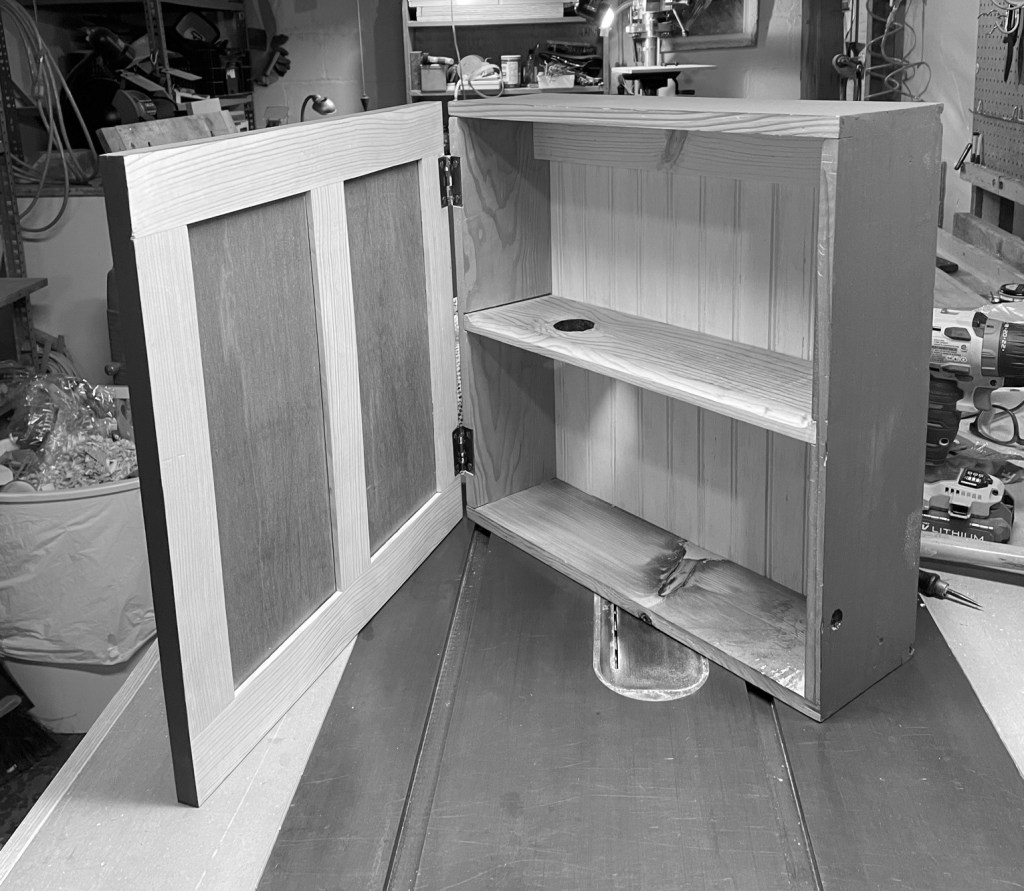
My extended family has a tradition of a homemade gift exchange around Christmas. Every year, the elder generation declares a theme and the rest of us arrive with our crafts in tow. The gifts have ranged from motorized, pewter biplane mobiles, to wall clocks up-cycled from old table saw blades. Last year, we were to re-gift or repurpose an old family object we had found or received that year. I used this prompt as an excuse to build this wall cabinet for the express purpose of holding the vintage desk stapler my father in law had rediscovered earlier in the year.
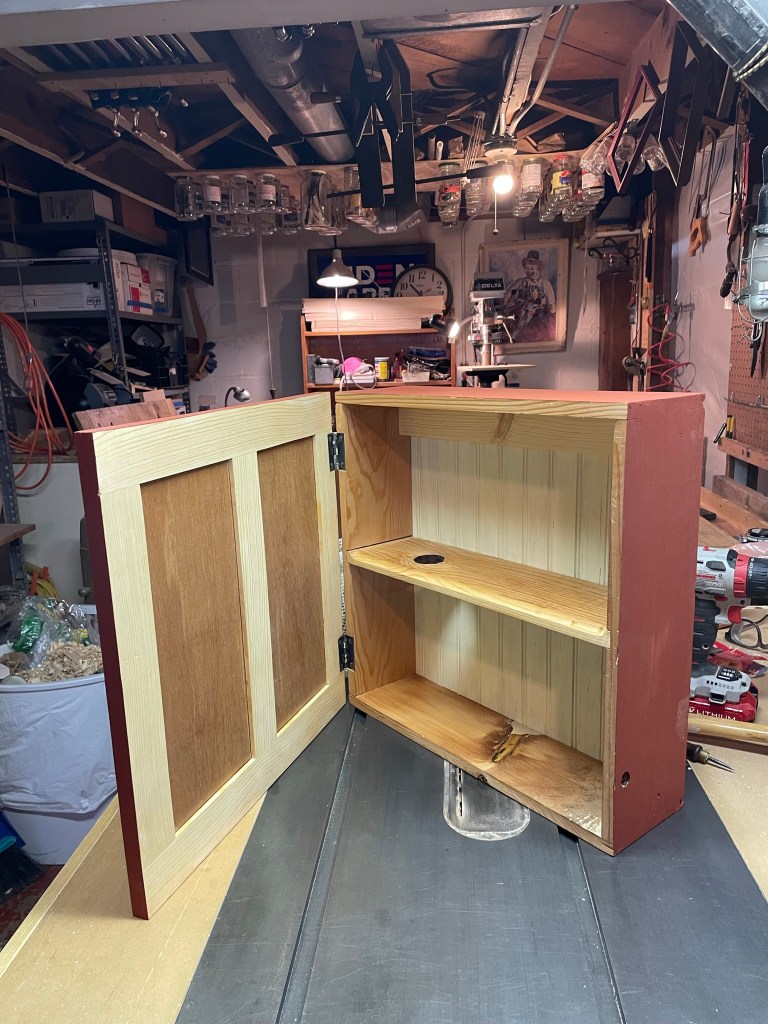
One of the first projects we tackled in our house was the disassembly of an old partition in our unfinished basement. The partitions were sheathed with ship-lap boards, painted on both sides and ranged in width from about 6″ to over 10″ at their widest. We think the basement slab was poured after the partitions had been erected and many of the lower boards were either too moldy or too wet to keep. The pine boards salvaged from higher on the walls were stripped, straightened, and planed to form the case of the wall cabinet.
At this point, I have only a few practice-dovetail joints under my belt and this was my first foray into actual dovetailed case construction. The results were as gappy as can be expected; nothing a dab of wood filler and a can of paint can’t fix.
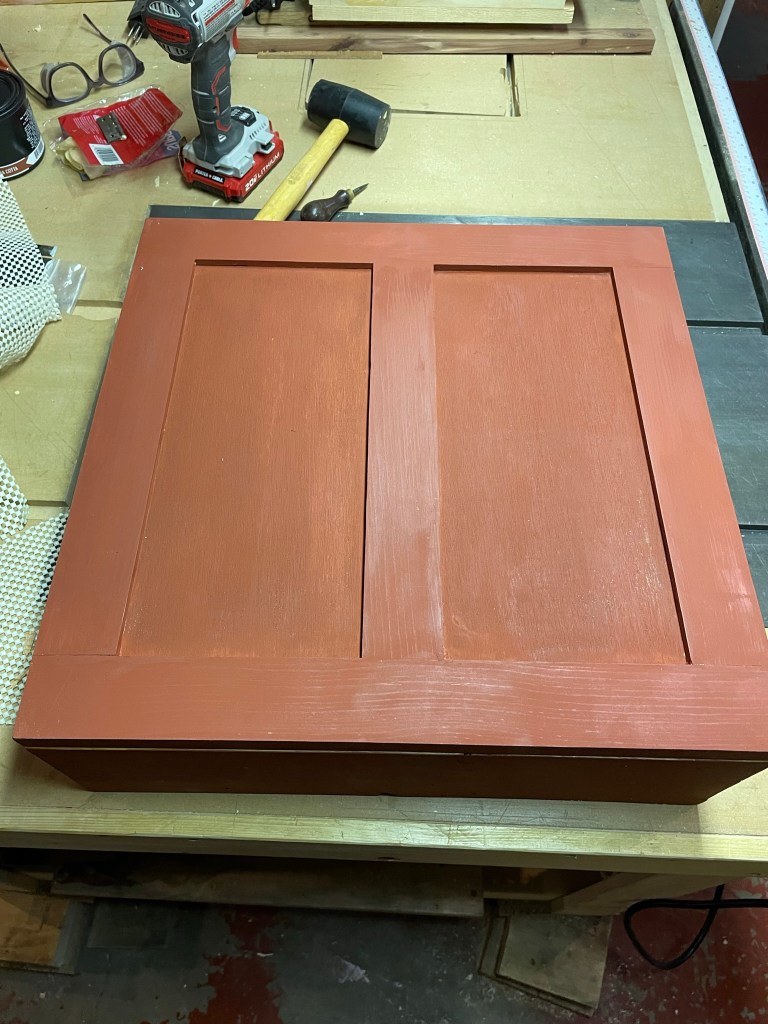
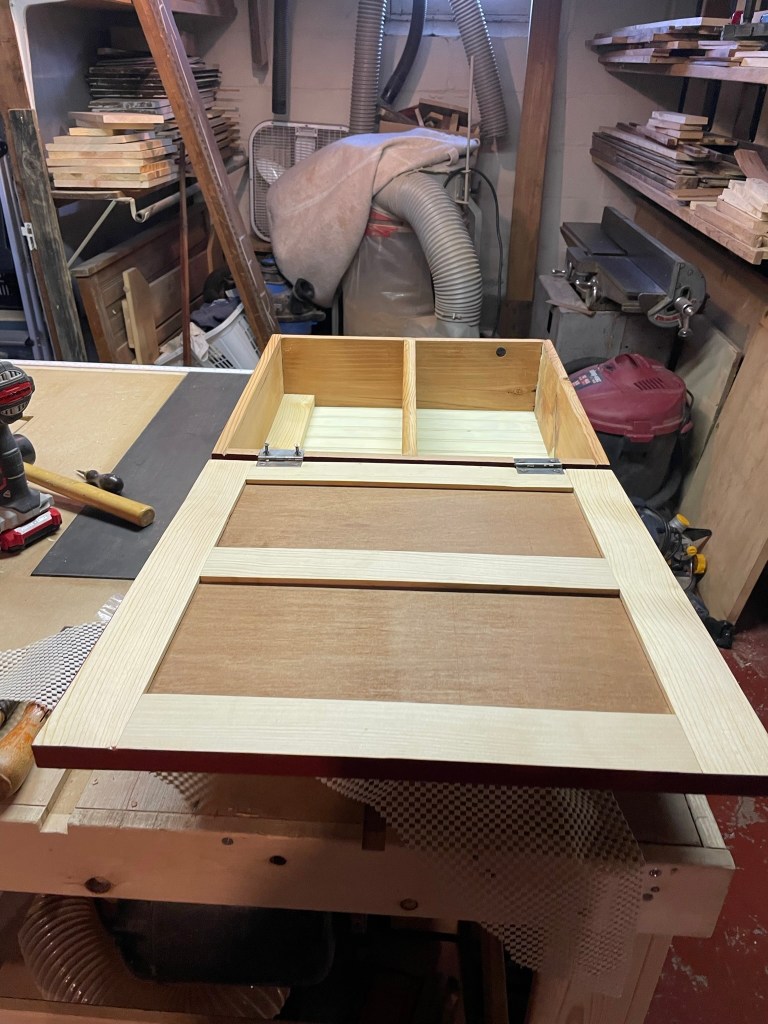
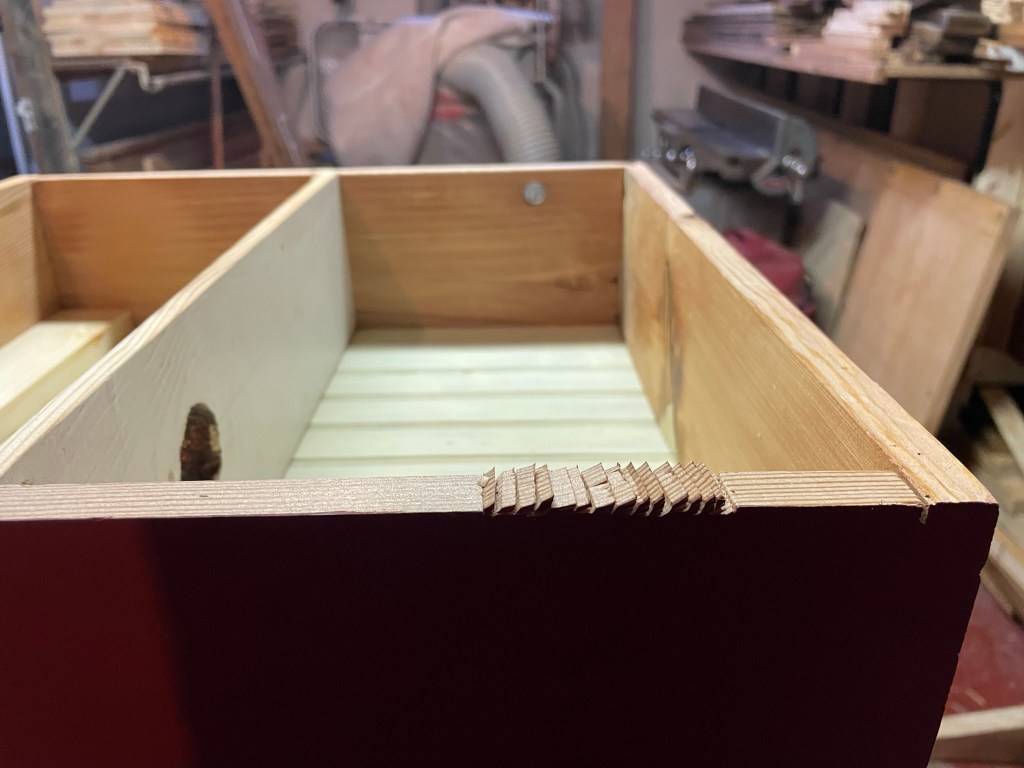
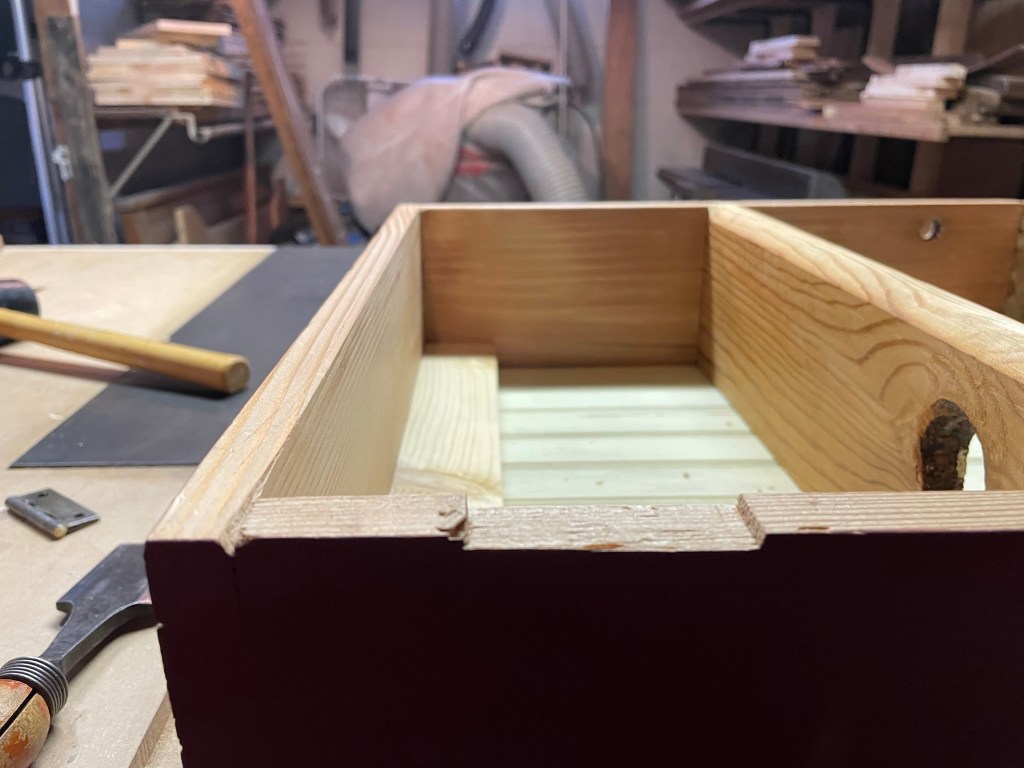
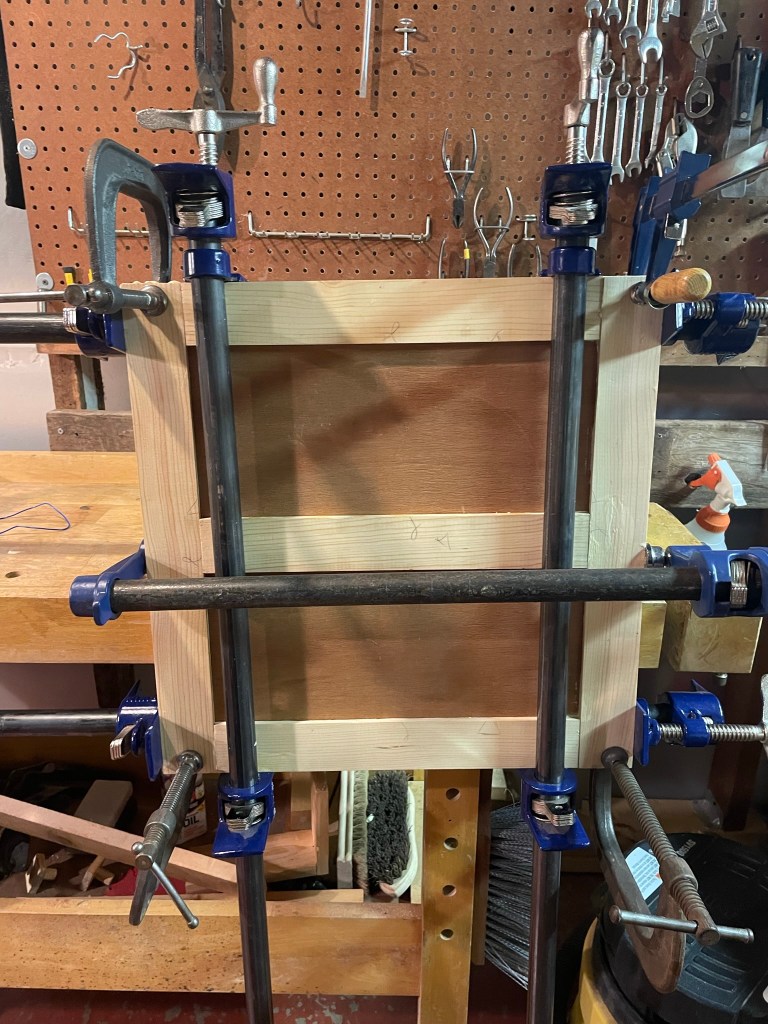
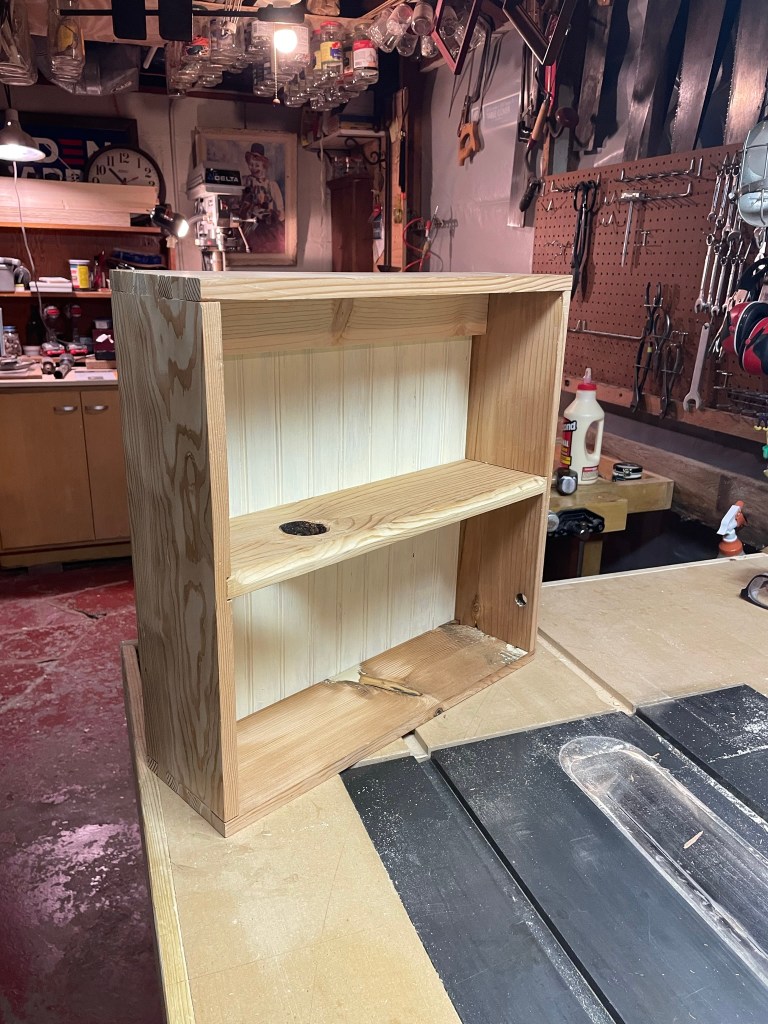
The case corners is thru-dovetailed and the shelf is supported by dados in the case sides. Before installing the shelf, I routed the inside back edges of case to house 1/4″ beadboard plywood. I finished the back with milk paint and fastened the back to the case with tacks.
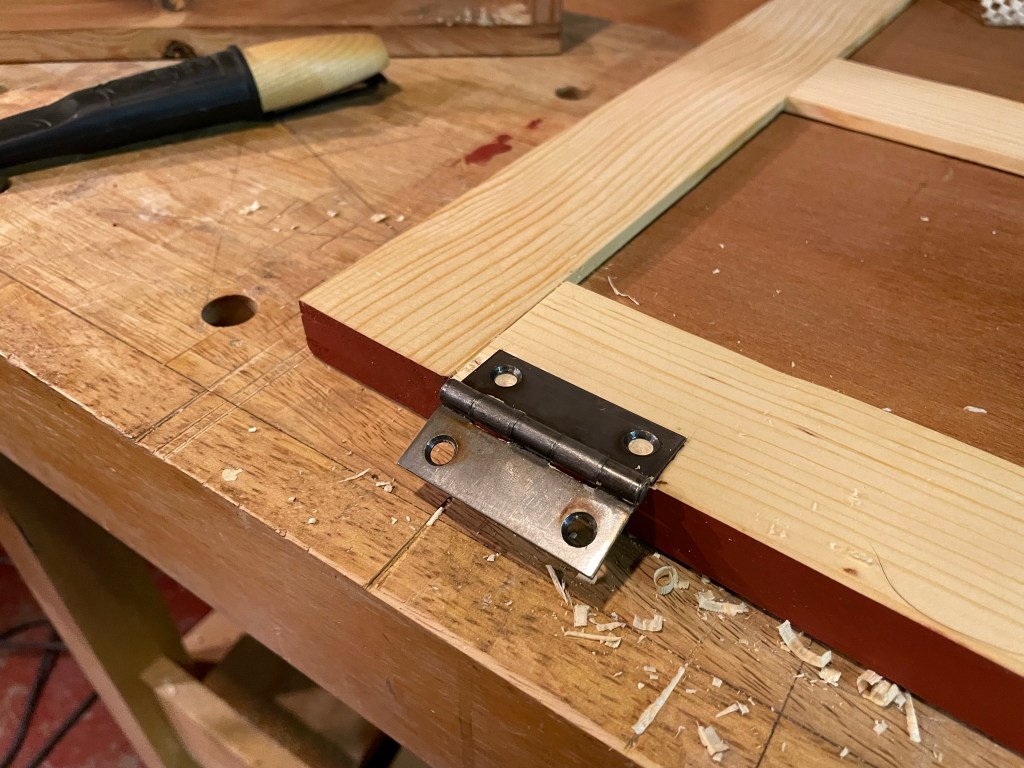
After an outer finish of terracotta milk paint and a tung oil top coat, I moved onto the hardware. The hinges were also salvaged items from our partition demolition and are mortised into the case and door.
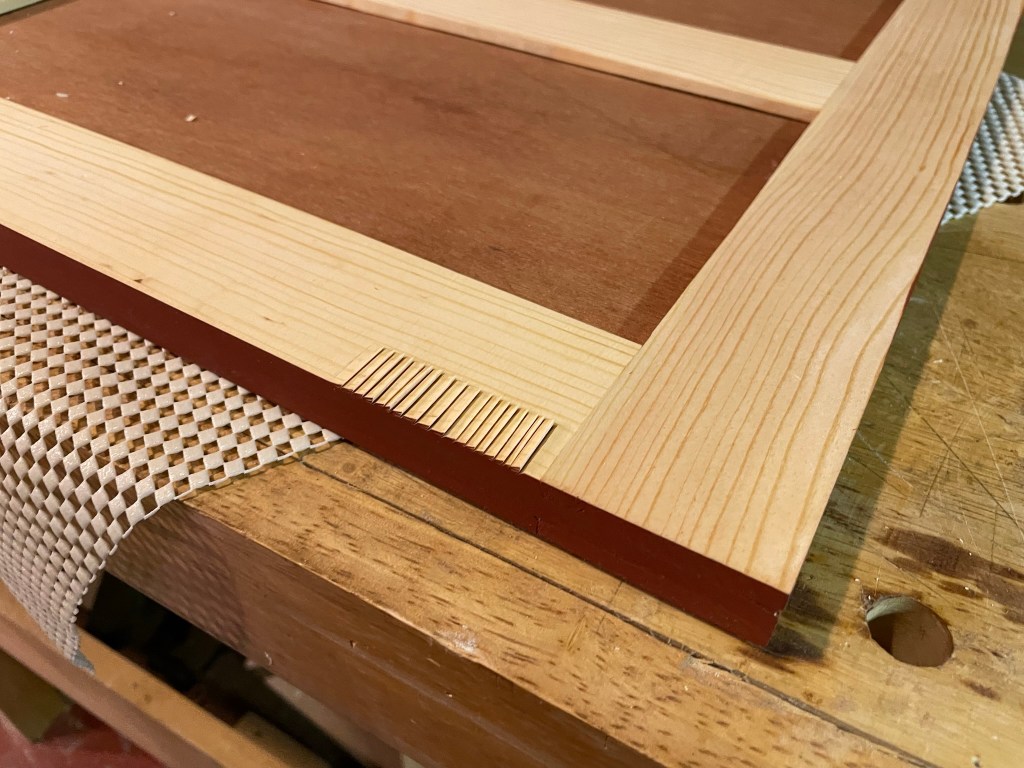
The case and the door reflect two very different stages in my woodworking experience and were built about 1 1/2 years apart. A big difference for me. The case dovetails show ample photons and the grain selection is scrappy at best. By contrast, the door’s rails and styles fit up nicely around the plywood panels for a neat and appealing assembly. This was a learning project, to be sure.
The recipient has since assembled a formidable vintage stapler collection to populate this small wall cabinet.
 Charles R. Vermace