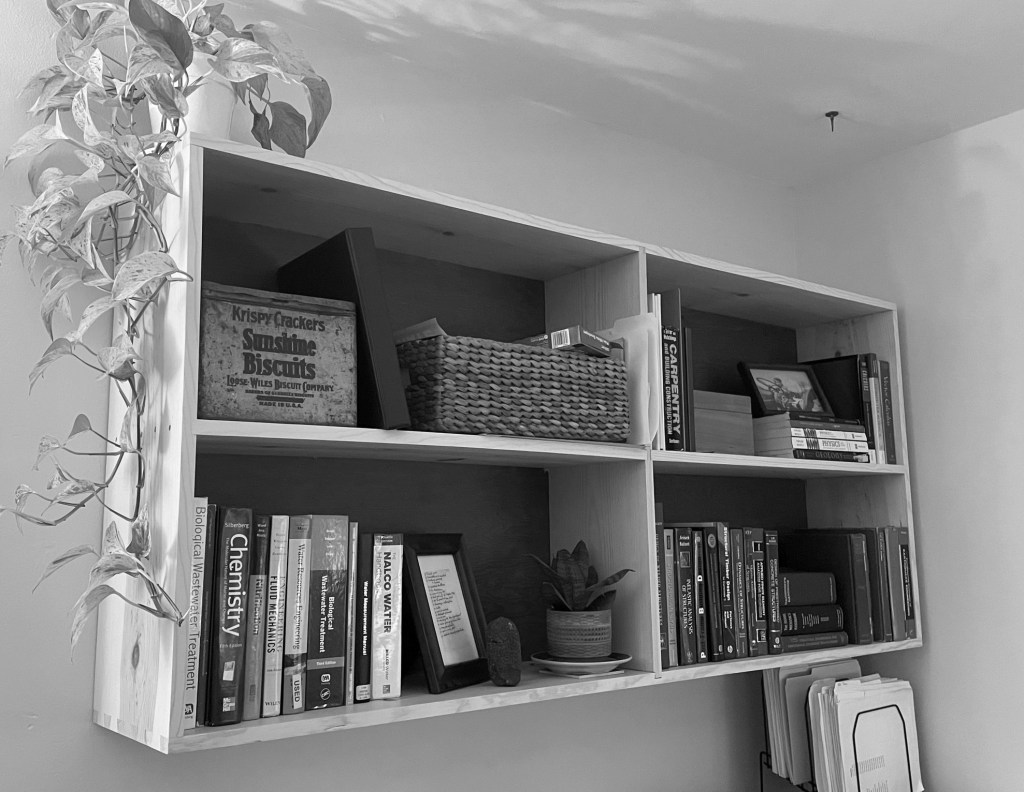
COVID has kept us working from home over the last couple of years, but now that we’re getting back into a hybrid office routine, we’ve decided to consolidate our home offices. With the move comes the need for better office storage…including the ubiquitous house plants. I had a few guiding criteria for the design and construction of the shelves:
- Use affordable lumber and incorporate salvaged material I had on hand.
- Provide a shelf deep enough to support typical reference books, magazines, an binders.
- Make the bookcases wall-mounted.
The shelf cases are made from 1×12 x 6′-0″ quality-grade pine boards from the home center (1 x 12 nominal, that is). I purchased two additional variable width boards for the French cleats. The back panels are 1/4″ plywood that I salvaged from the old ceiling in our unfinished basement.
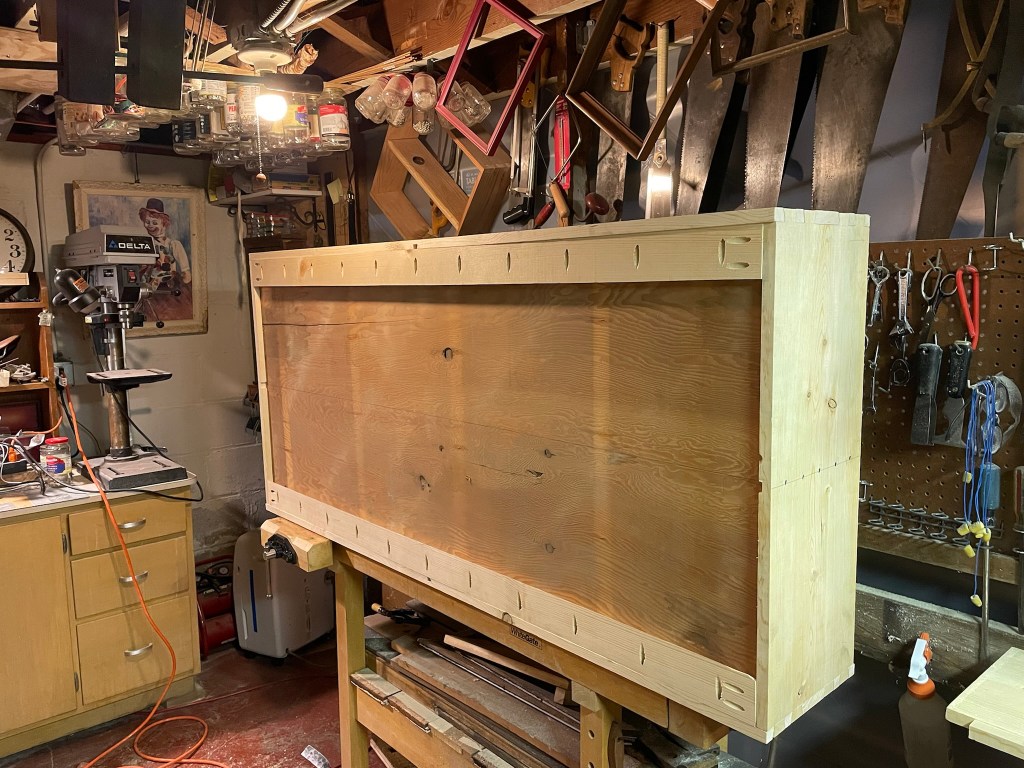
I like to begin tails-first, you may flip a coin if you wish. Unlike Select grade lumber, Quality grade lumber includes knots that cannot always be eliminated from a piece of furniture. The large pin in the middle of one of the side boards was included to avoid a knot at the end of this board. The other corners of this unit were cut to match.
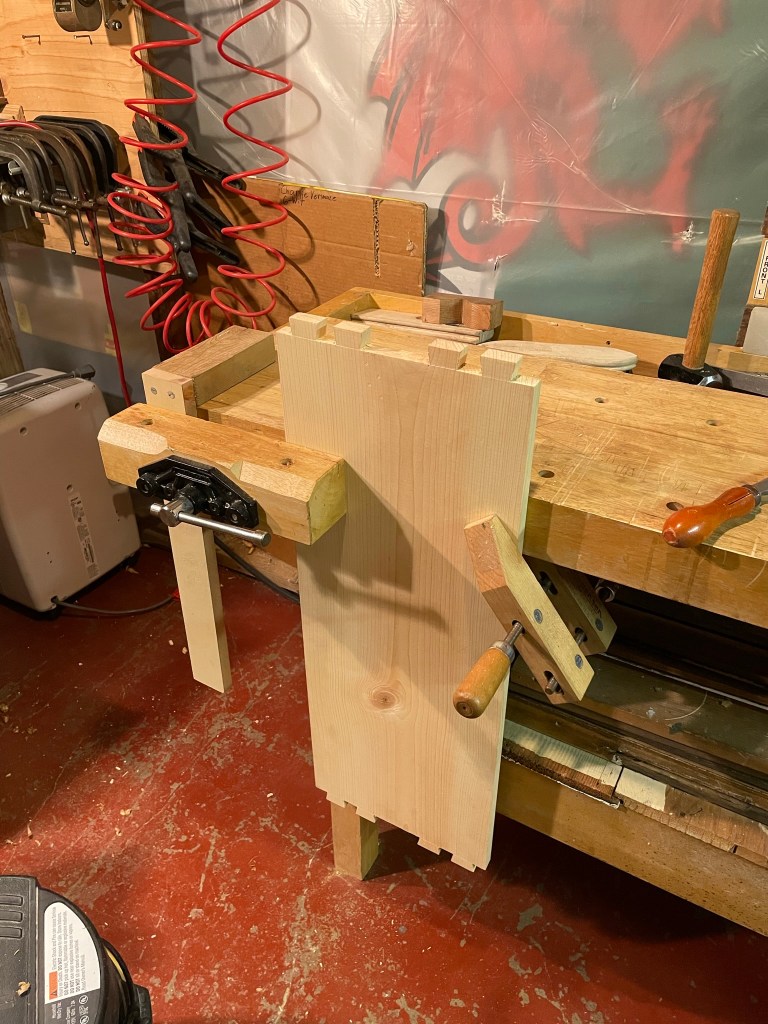
Now for the clean up. I cut the tails for all four side pieces (two shelf units) before transferring marks to the pins. You can see that for the two other side pieces I was able to avoid knots within the dovetail joint. It was close, but I just made it.
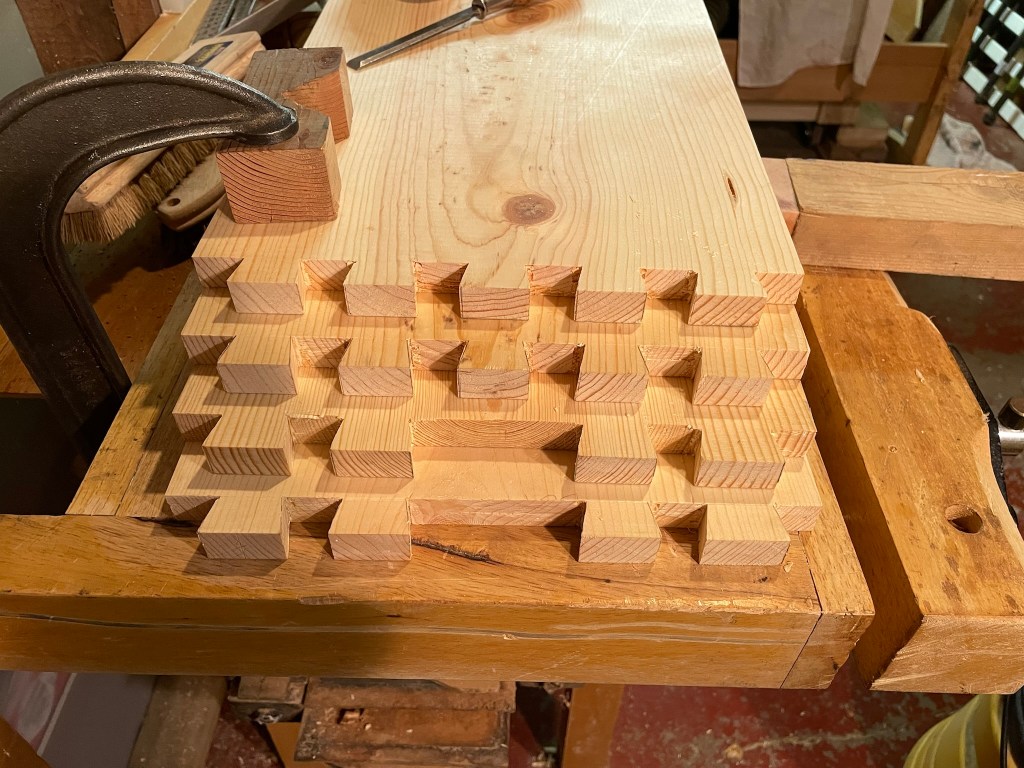
Once the tails were trimmed and cleared, I transferred marks to the pin boards. The tops and bottoms boards were far too long, and I am too short, to cut the pins with the boards on end. I instead camped myself at the end of the bench to access these cuts. I removed the bulk of the waste with a coping saw and routed the remaining waste with a short flush trim bit, à la Pekovich.
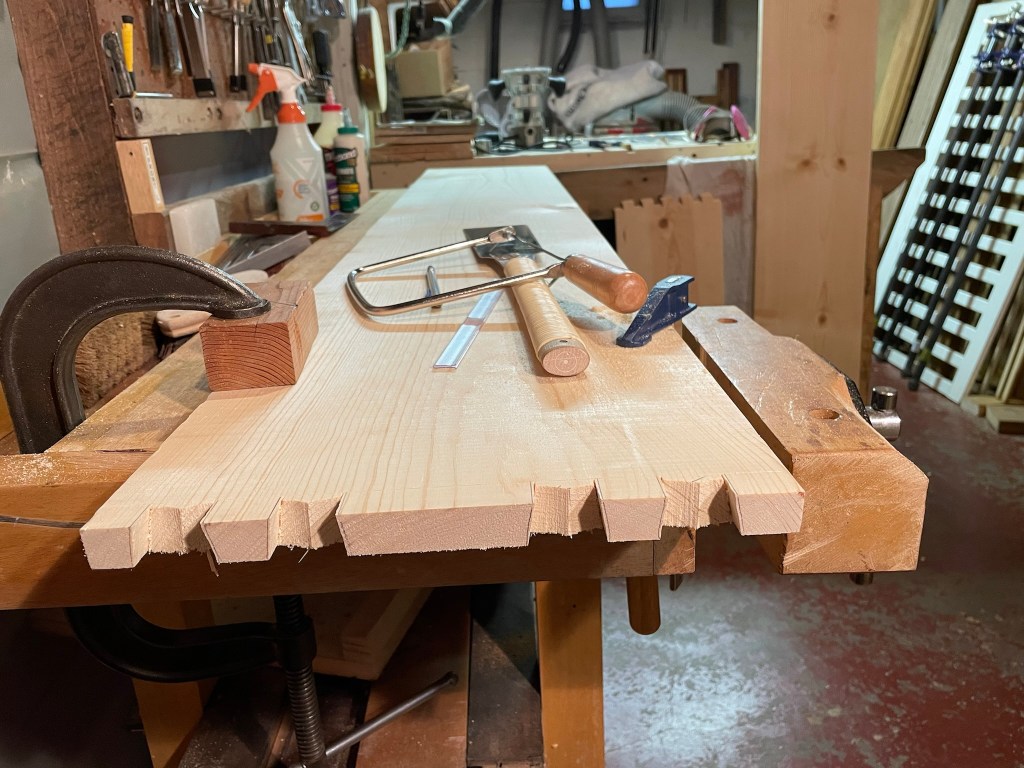
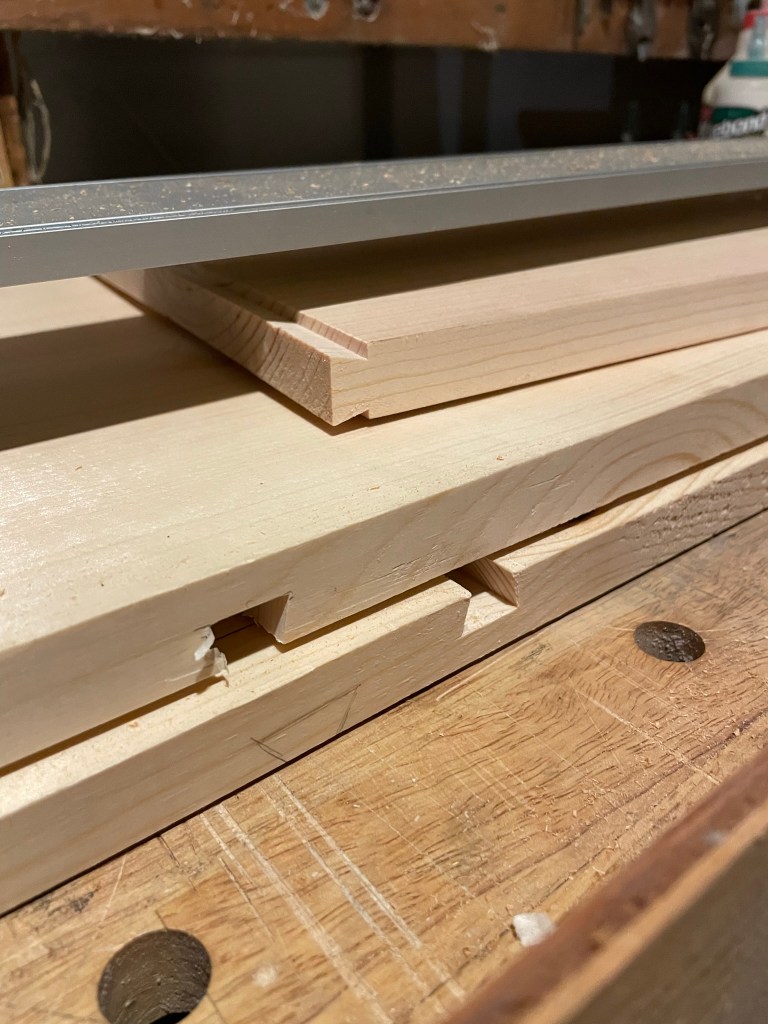
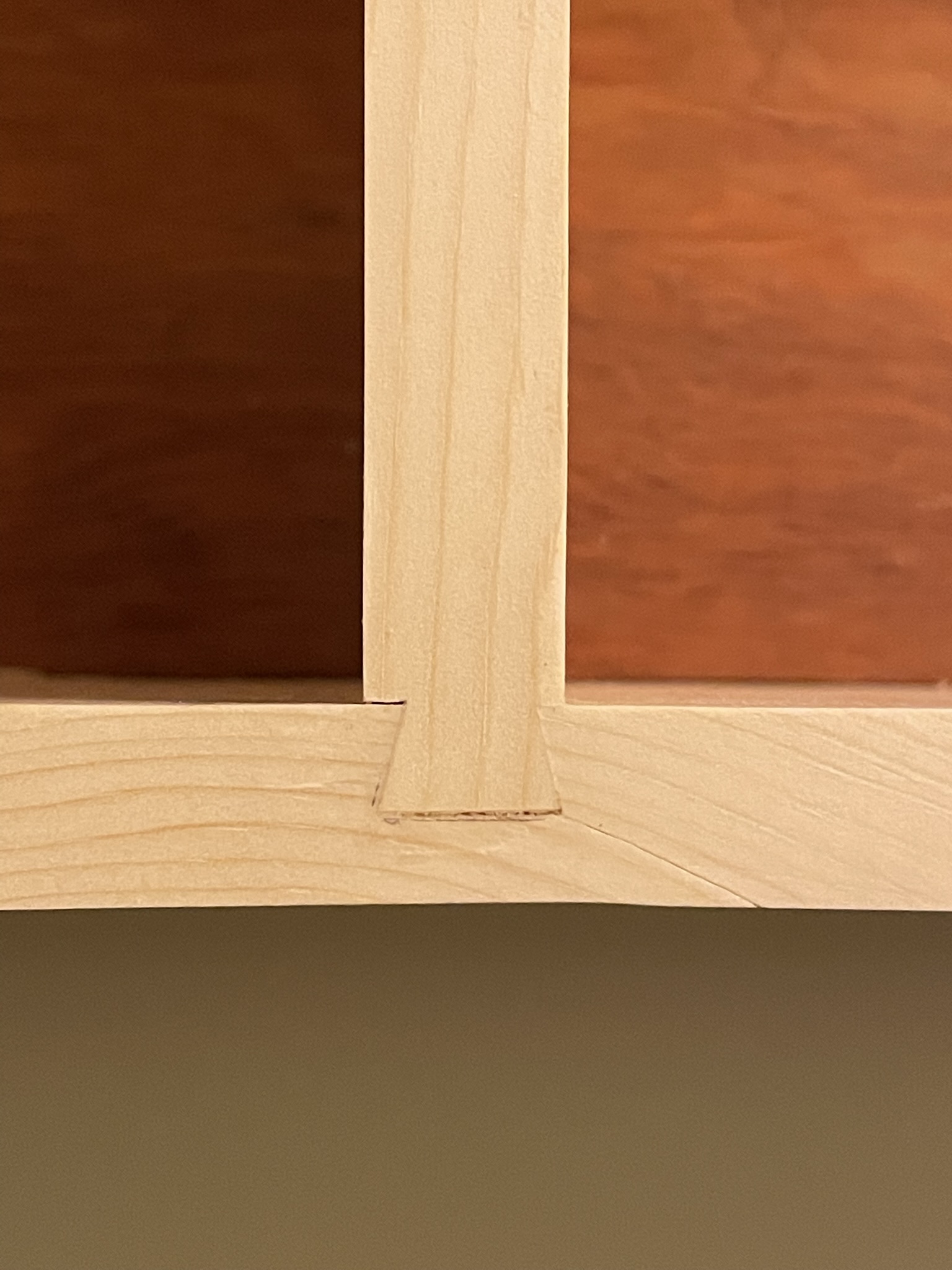
On to dividers. The shelves needed to support a lot of engineering reference books, a hefty task. Dados, glue, and nails felt inadequate for the sustained loads in the center dividers; Sliding dovetails offered a bomb-proof solution. This was my first attempt and I think they came out well. I used an aluminum straight edge and a dovetail router bit.
Enter French cleats. The cleats can be mounted and leveled with out the full weight of the bookshelf and the continuous cleat can be secured directly to the wall studs with structural wood screws. Once mounted, the main bookshelf can be hung on the cleat and slid horizontally for final placement. The cleat and nailers built into the back of the bookshelf are also fastened to the wall to prevent the bookshelf from sliding off the cleat.
Time for some joinery shots.

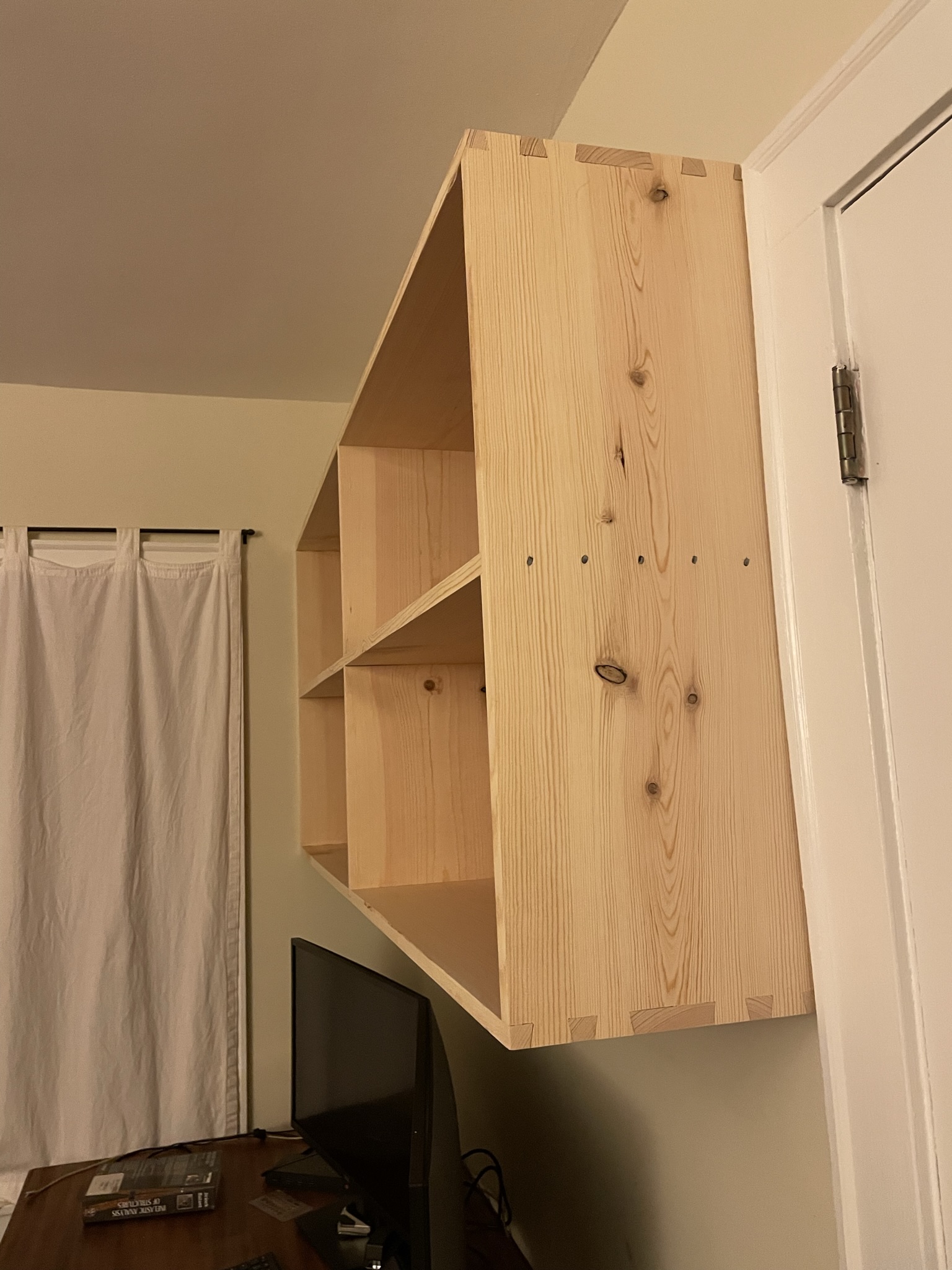
I trimmed the joints and aligned edges with a hand plane, then sanded the whole case to 320 before applying the finish. I applied three coats of water-based polyurethane, sanding in between coats. The back panel was not sanded as the original finish was still in good shape.
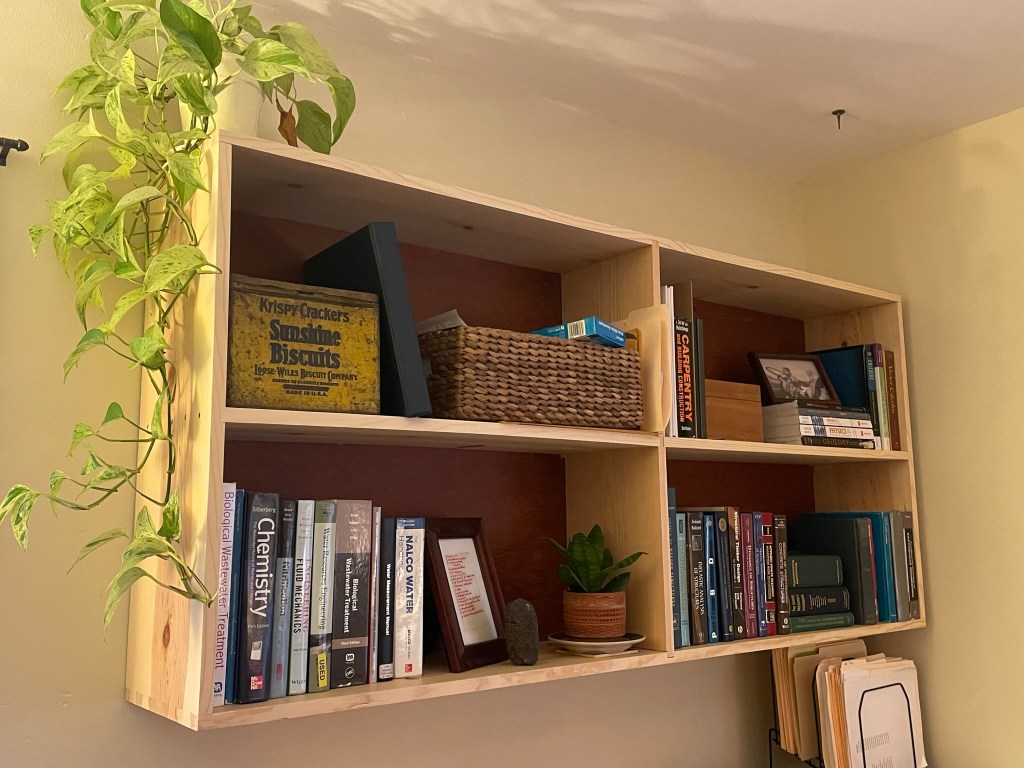
The shelves were purpose-built and fit our newly redecorated office nicely.
 Charles R. Vermace