
As many upper-Midwesters might, I have accumulated a small stockpile of old alpine skis ranging from classic Harts, to battered Dynastar rentals. Like any self-respecting thrifter, I’ve intended to use these free skis for something. As we move into grilling season, we’re finding we have a need for additional seating in the backyard. I could buy a few used lawn chairs, but why do that when I could could spend way more time and about the same amount of money making chairs by hand? As a hobby woodworker, the choice is obvious.
The Adirondack received their name in the 1830s from one Ebenezer Emmons, a geologist and mountain climber that is thought to have adapted the name from the Mohawk’s derogatory term for their neighboring Algonquins [link]. Adirondacks : eaters of trees, how fitting for an exercise in woodworking masochism.
Start with the stock. Treated lumber tends to have a much higher moisture content than typical construction lumber, and especially properly air or kiln dried woods. So, before cutting the stock to rough lengths, I let the boards acclimate to the basement workshop. You can see the water wicking out the exposed ends of each of the freshly purchased boards. Progress.

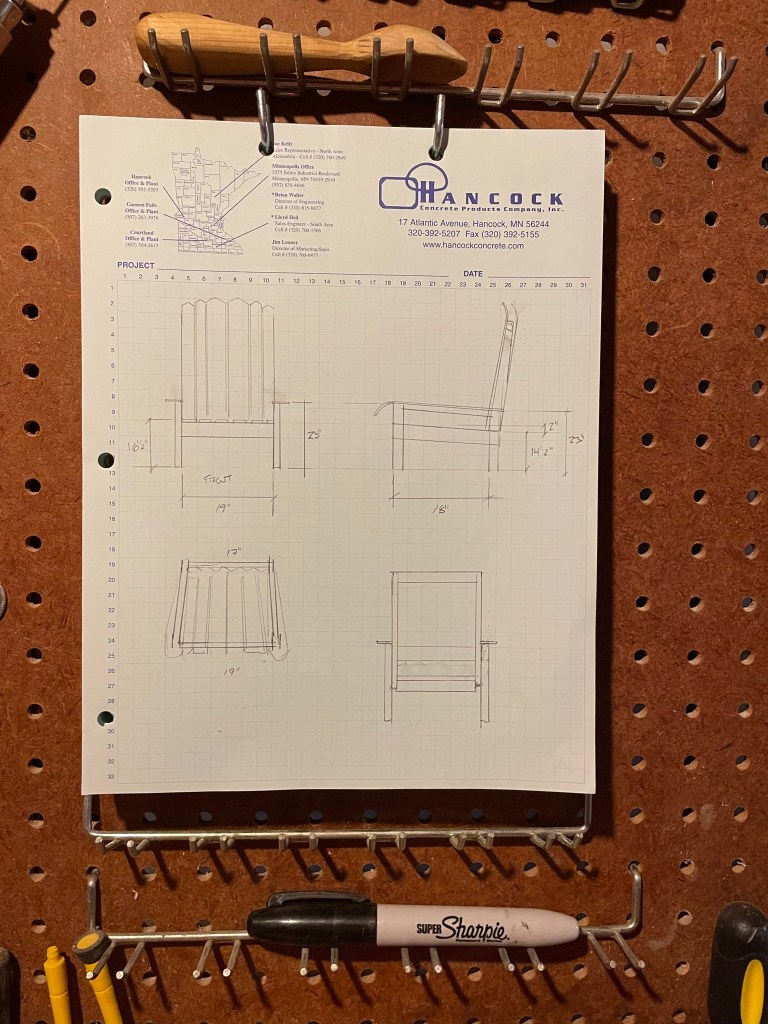
After a couple of weeks of waiting for the boards to dry, it was time to begin breaking down the stock. I cut each a little bit long , both to allow some trimming to square as needed and to provide some flexibility as I work out the design as I move through the building process.
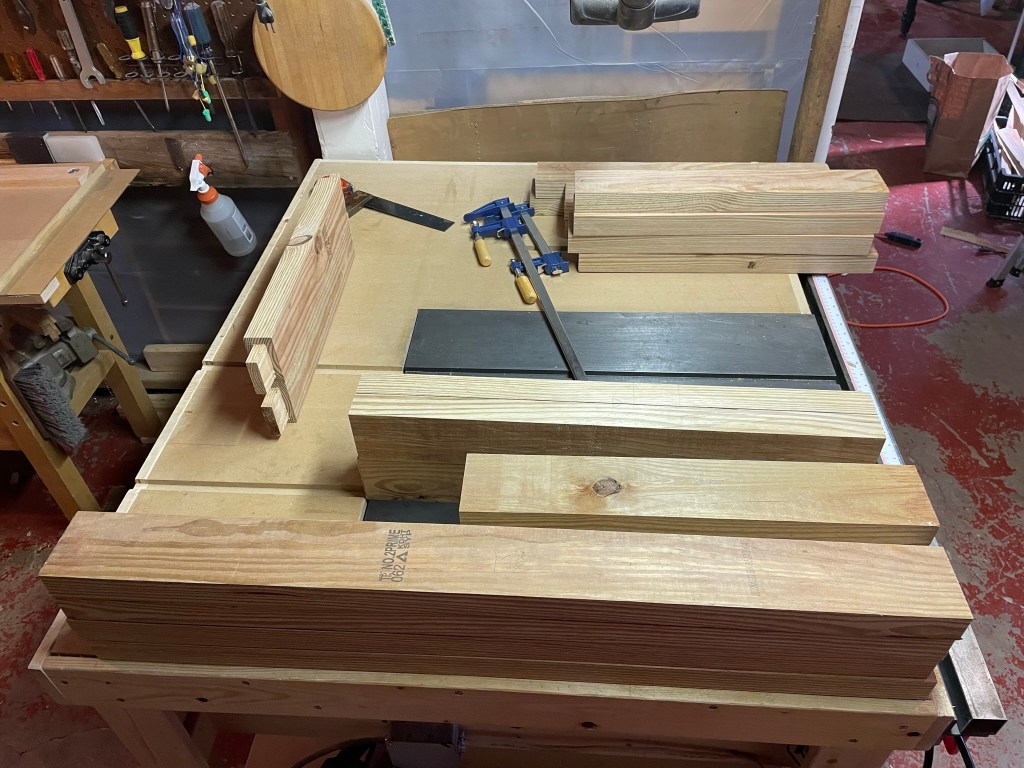
In lieu of typical screws and construction adhesive, I use these chairs as an exercise in mortise and tenon construction. As these will be primarily outdoor chairs, I expect they will experience all manner of bumps, racking, overturning, and weather. So, a few classic tenons can’t hurt.
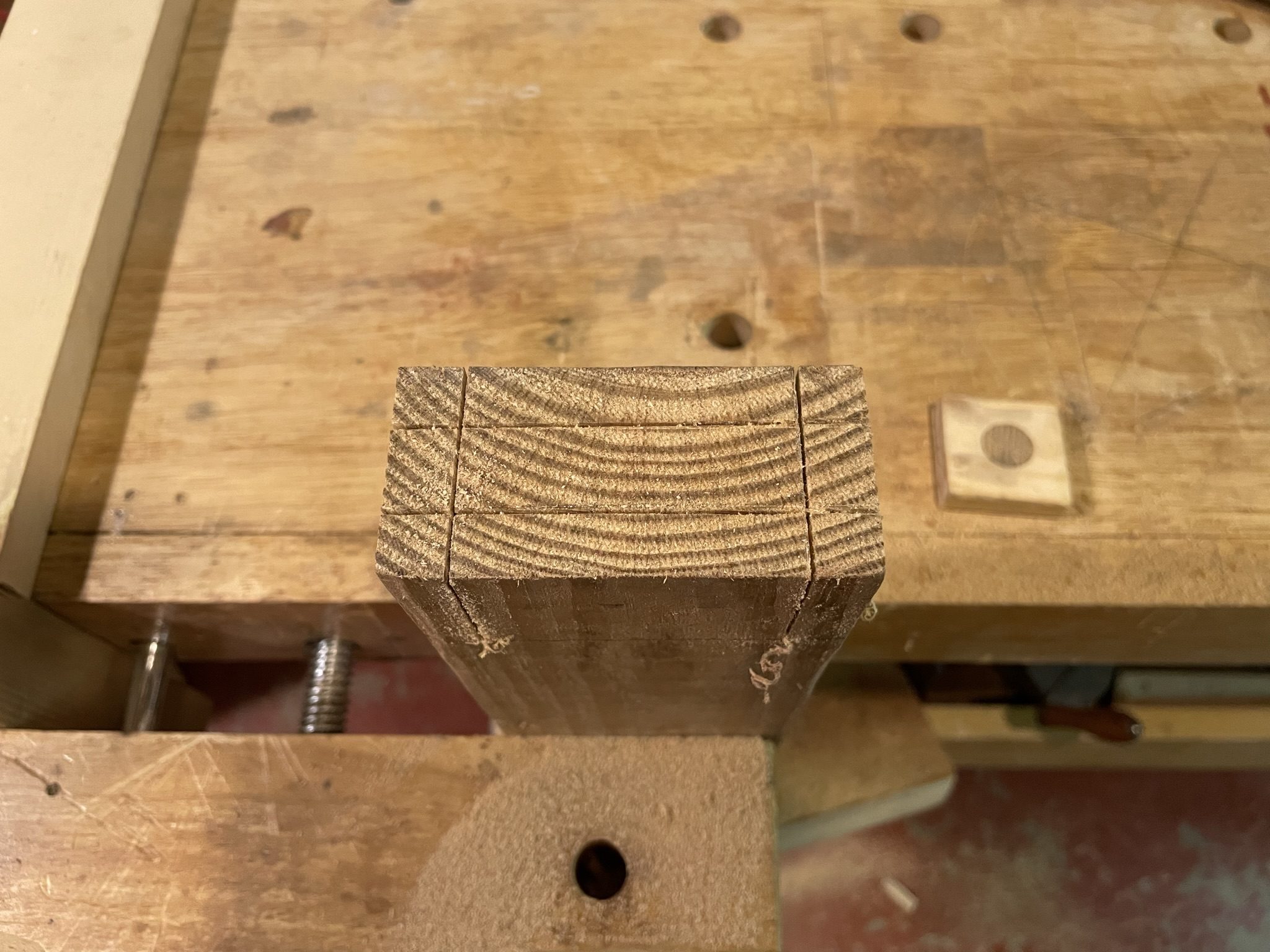
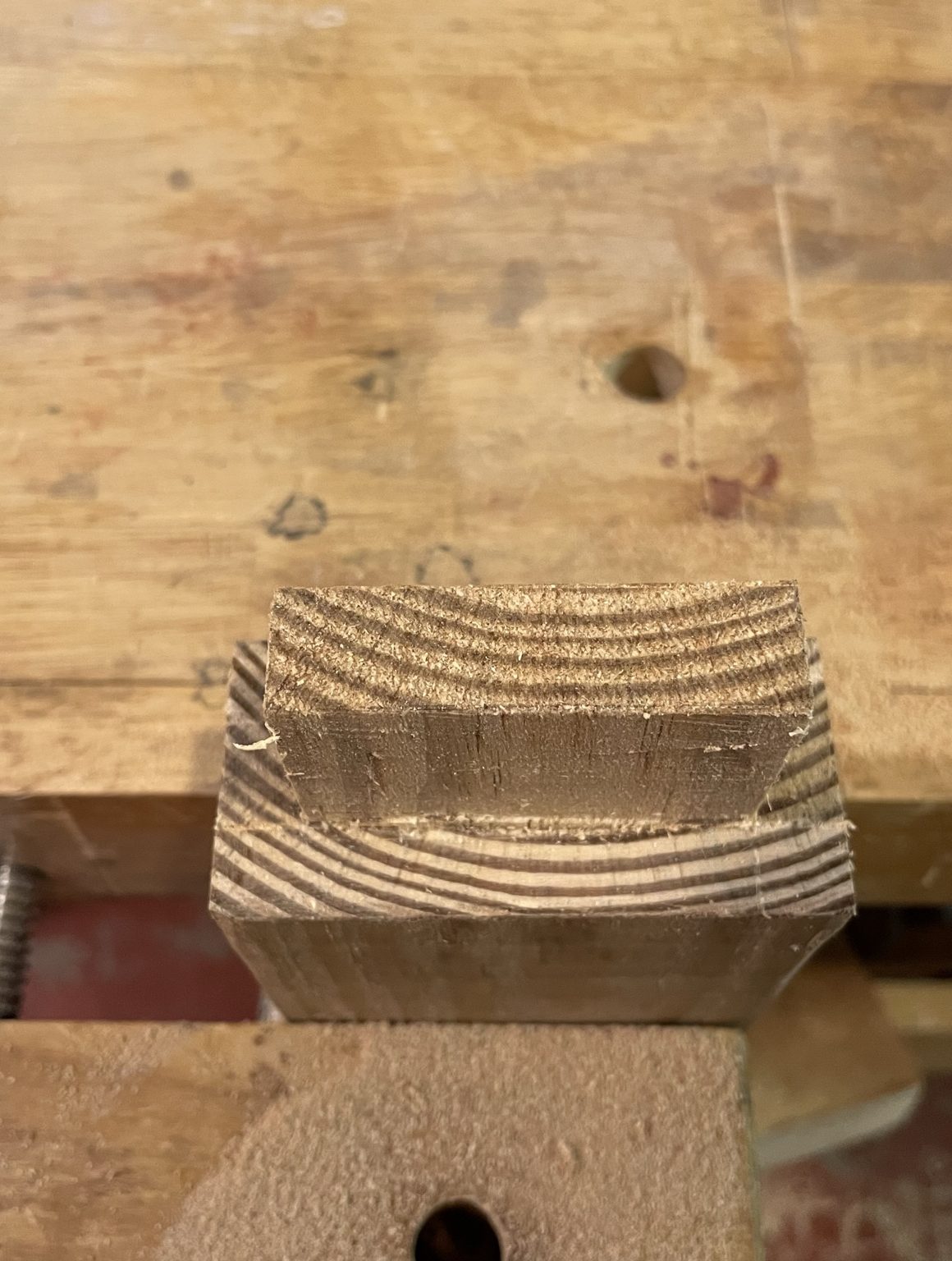
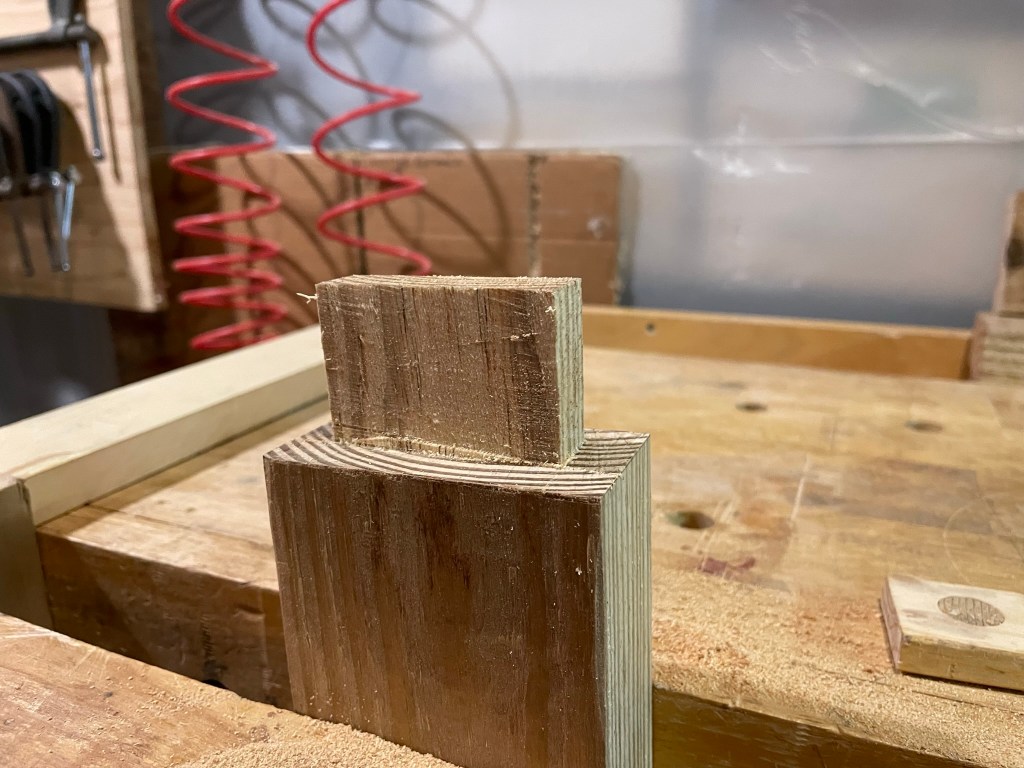
I marked, bored, and trimmed the mortises in the front and back legs before moving onto the tenons for the side rails. Rather than providing a continuous boarder of seat rails, I have placed the side rails parallel with the ground and about 4″ lower than the front and back seat rails.
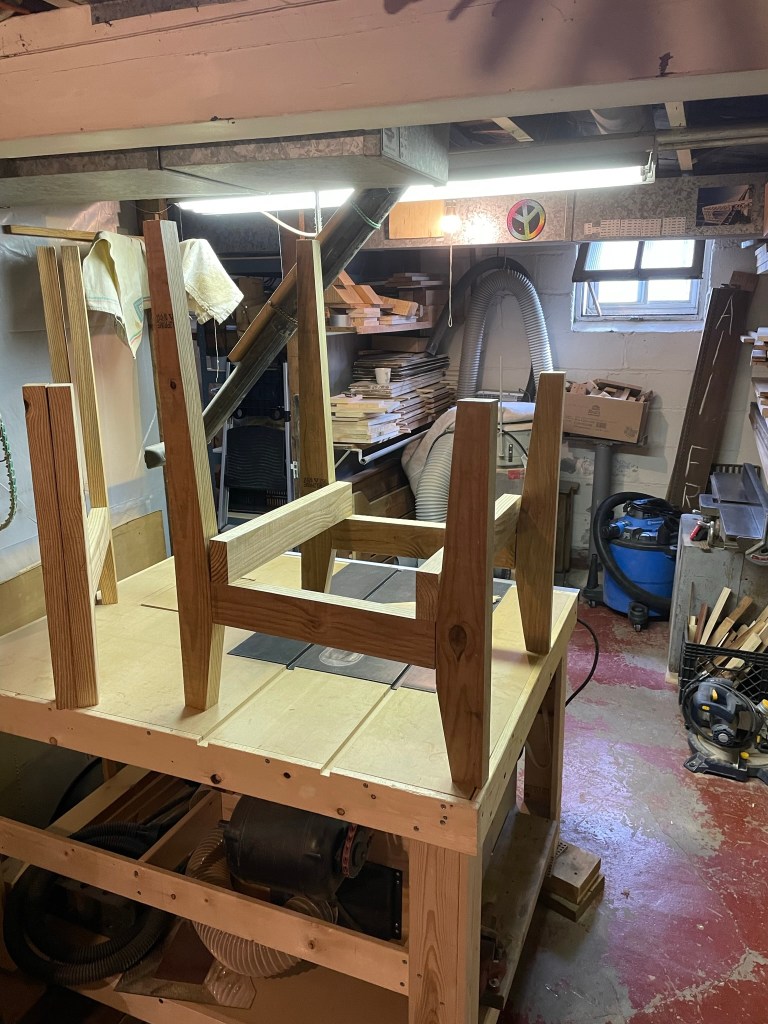
With the sides assembled, I can move on to the front and back seat rails. The sides of the chair splay slightly such that the front rail is about 1 1/2″ longer than the back chair. Here, I’ve elected to again use straight tenons in the rails, so the mortises in the front legs must be angled by 1/2 the degree of the total chair splay. This I plan to accomplish on the drill press using a temporary fence on a ramped auxiliary table clamped to the original drill press table.
Check back or subscribe for Part II of the Adirondack build.
Cover image by Elise Fine, Adirondacks in the Fog
 Charles R. Vermace